Article Contents
For the first few days with a new car you look at it every time you park. The paint shines, there isn't a single mark on it, and you want it to stay that way. This is also the easiest moment to protect it.
What you do in the first months matters more than you might think. The first stone chip on the motorway and the first trip through a brush car wash leave marks that won't go away on their own. Below you'll find what to watch out for when washing, and how PPF film and ceramic coating work together.
- Protection goes on most easily while the paint is still in perfect condition. Later on it usually needs polishing first.
- Avoid brush car washes and never wipe dust off with a dry cloth.
- PPF goes on the front, where the stones hit. It is invisible and lasts 7–10 years.
- Ceramic coating makes the rest of the body shine and wash more easily for up to 5 years.
1. Why Now and Not in a Year
Neither ceramic coating nor PPF repairs damage. They protect whatever is underneath. If they go on over wash marks or small chips, those stay there, sealed in.
On a car that is a few months old, the preparation is usually light. On a car that has been through a winter and plenty of washes, it often needs paint correction first to remove the marks. That means more hours of work, and every polish takes off a very thin layer of clear coat.
And there is one thing no polish can fix: a stone chip that went through to the paint. That needs a respray. PPF is there so you never get to that point.
2. The First Wash: What to Avoid
Most marks on new paint aren't caused by the road. They're caused by washing.
- Brush car washes. The brushes carry grit from the cars that went through before yours and leave fine circular lines. In the sun they look like a spider's web.
- A dry cloth on dust. Dust is tiny bits of stone. Drag it dry across the paint and it scratches.
- One bucket for everything. The dirty water goes straight back onto the paint. That's why we wash with the two-bucket method.
- Washing in direct sun. The water dries before you can rinse it and leaves mineral spots on the paint.
If you don't have the time or space to wash properly, a hand wash every few weeks makes much more of a difference than you'd expect.
3. PPF on the Front, Where the Stones Hit
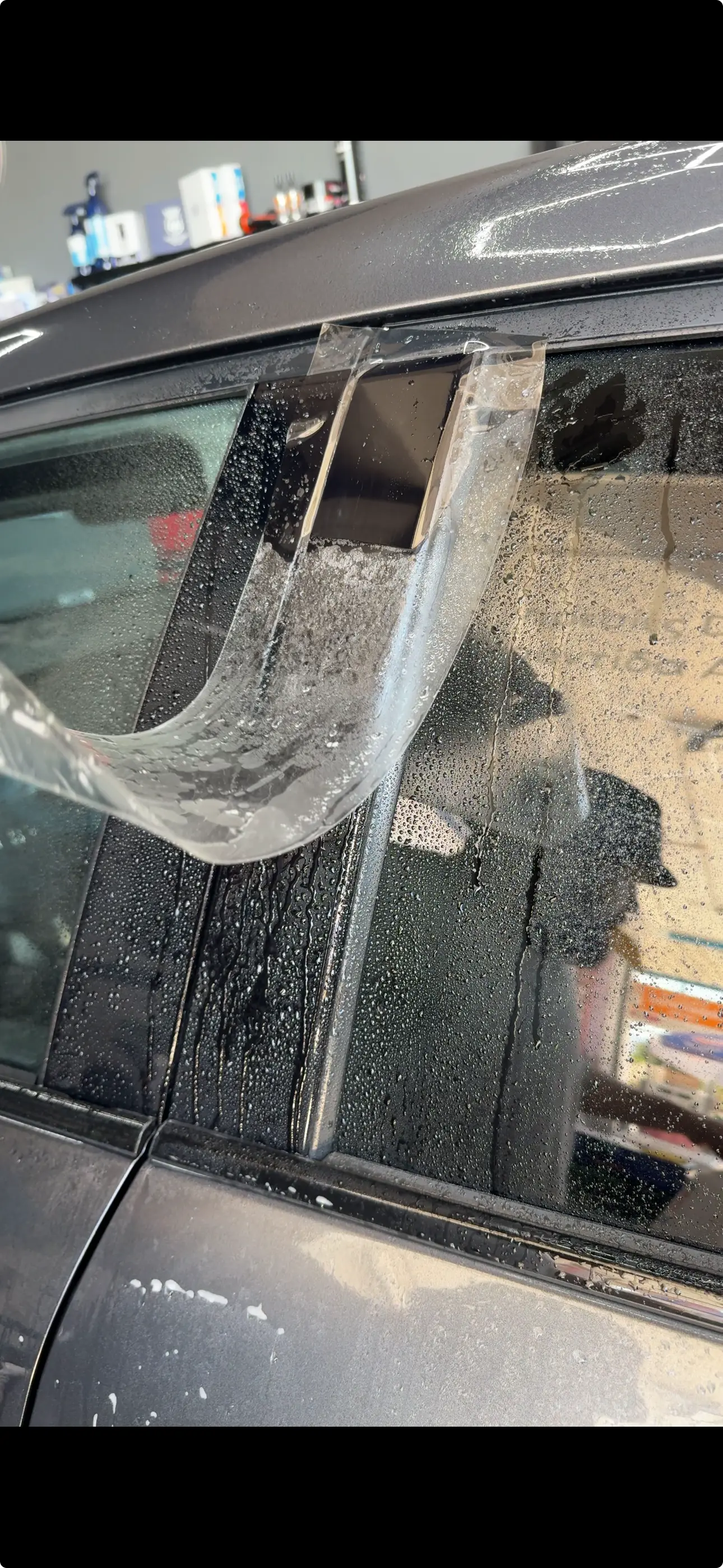
The front of a car takes almost every stone thrown up by other cars' tyres. Only PPF protects that area: a clear polyurethane film that sits on the paint and takes the hit itself.
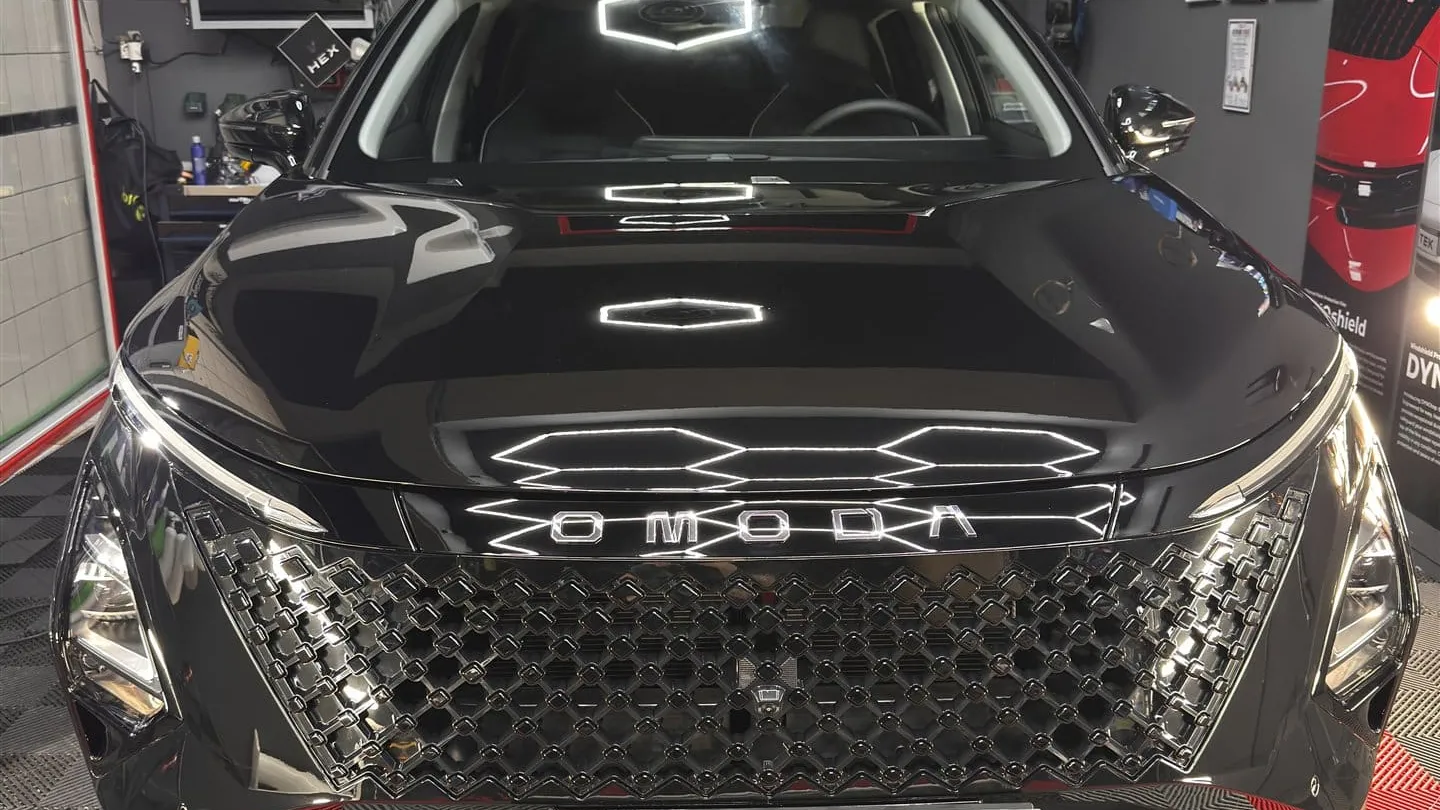
On the Omoda 5 in the photo we covered the whole front end with PPF: bumper, front wings, bonnet, headlights and mirrors. The film is invisible and the car looks exactly as it did when it left the factory. The full job is in our gallery.
- Light scratches in the film disappear on their own with the heat of the sun or warm water.
- It blocks the UV light that fades paint.
- It lasts 7–10 years, and most manufacturers give a 10-year warranty.
If you often drive on the motorway, covering the front end is the first thing worth doing. It is also what most of our customers choose.
Just got a new car? Tell us the model and colour and we'll suggest what it needs.
4. Ceramic Coating for Everything Else
Ceramic coating doesn't stop stones. It does something else: it bonds chemically with the clear coat and leaves a hard, slick surface. Water runs off in beads and takes the dirt with it. Bird droppings and insects don't bite into the paint as easily, and washing takes much less time.
Ceramic coating doesn't hide flaws, it seals them in. So even on a new car we check every panel under strong light before we start. If we find anything, we correct it with a light polish. Then we wipe everything down with isopropyl alcohol and apply the coating by hand, panel by panel.
The car needs 24–48 hours for the first cure and 10 days for the full cure. During that time, keep it away from water and chemicals. The protection lasts up to 5 years, depending on how you wash the car and where you park it.
5. Which Combination Suits You
- Mostly city driving and a garage: ceramic coating on the whole body is usually enough.
- Frequent motorway driving: PPF on the front and ceramic on the rest. The PPF takes the hits, the ceramic keeps the whole car clean. Ceramic can also go on top of the PPF.
- You never want to think about the paint again: full-body PPF.
We explain the difference between the two in more detail in Ceramic Coating or PPF: Which to Choose.
FAQ
How soon after buying should I bring the car in?
The sooner, the less preparation it needs. Ideally in the first few weeks, before a lot of motorway miles and before the first brush car wash.
Can you see the PPF?
No. It is clear and changes neither the colour nor the gloss. If you want a matte look, there is also a matte film that turns gloss paint matte without a respray.
Can I get ceramic coating later?
Yes. It just needs more preparation, because the wash marks have to come out first.