Article Contents
If you want to protect your car's paint, sooner or later you'll face the big dilemma. Ceramic coating or Paint Protection Film? Many think they do exactly the same job. The truth is, they serve completely different needs.
At HEX Detailing Garage in Trikala we see drivers confused between the two options every day. Let's make clear what each one does, what the pros and cons are, and which one really fits the way you use your car.
- Ceramic coating gives gloss & hydrophobicity, but no protection from impacts.
- PPF absorbs stone chips and light impacts, but costs more.
- Ceramic fits city driving; PPF fits frequent motorway miles.
- Many combine PPF up front with ceramic on the rest of the car.
Ceramic vs PPF: Comparison at a Glance
Before we get into detail, see the key characteristics side by side.
| Characteristic | Ceramic Coating | PPF Film |
|---|---|---|
| Material thickness | 1–5 microns | 150–200 microns (6–8 mil) |
| Lifespan | 2–5 years | 7–10+ years |
| Surface hardness | Up to 9H on the pencil test | Not rated in 9H, absorbs the impact instead of resisting it |
| Protection from stone chips & impacts | None | High |
| Self-healing of light scratches | No | Yes, with heat |
| Gloss & paint depth | High | Medium |
| Hydrophobicity & easy cleaning | High | Low |
| Application cost | Lower | Higher |
Thickness, hardness and lifespan figures correspond to typical specifications of professional-grade ceramic coating and PPF (thermoplastic polyurethane, TPU) products. Actual durability always depends on the product, preparation and maintenance.
What ceramic coating is and what it offers
Ceramic coating is a liquid chemical product that bonds directly with your car's clear coat.
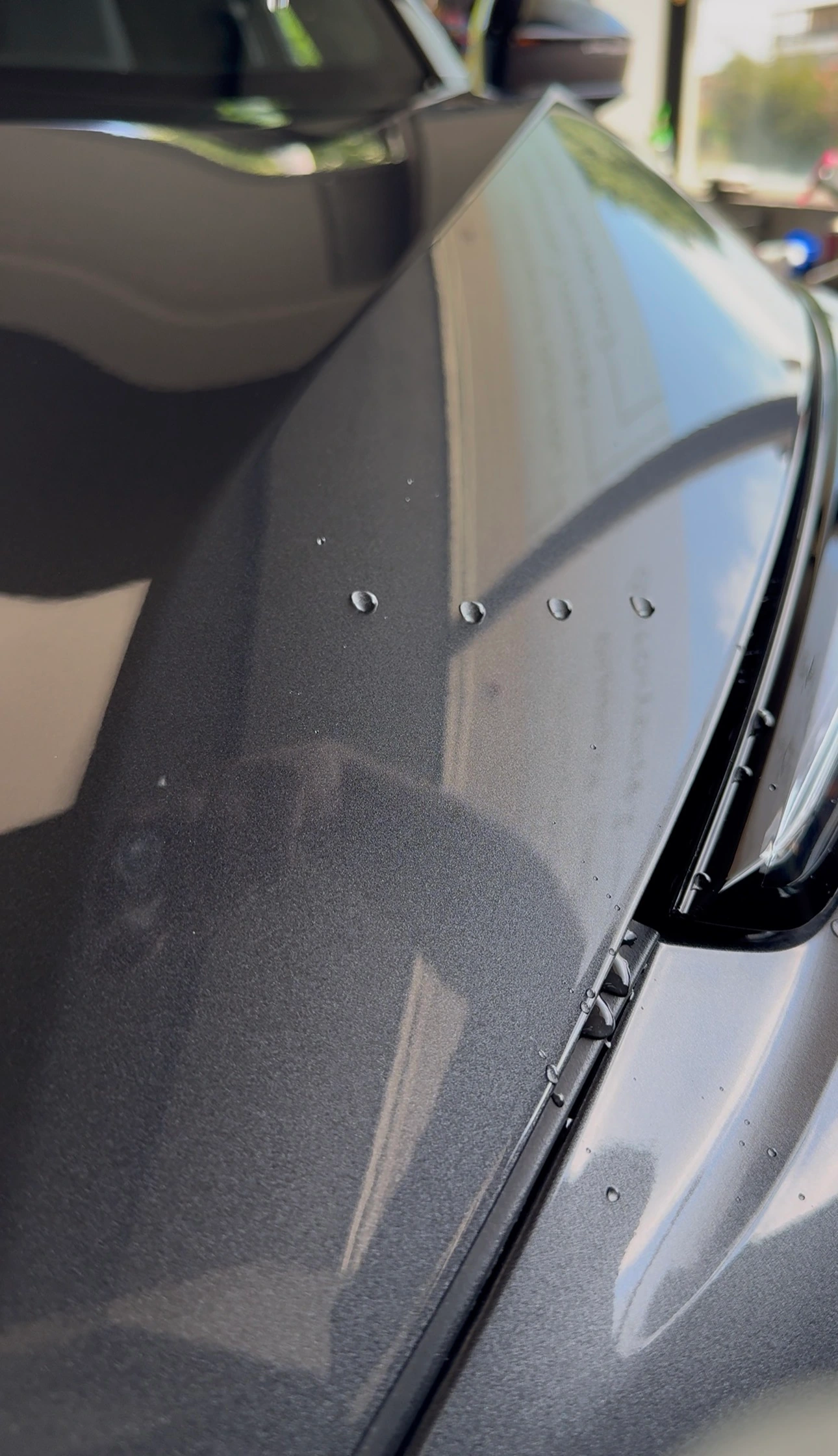
Benefits: It gives incredible gloss, makes the car hydrophobic so it cleans easily with water, and protects it from UV rays, bird droppings and tree sap. It also prevents fine swirl marks caused by washing.
What it doesn't do: It offers no protection from mechanical impacts. If a stone is thrown up while you're driving on the motorway, ceramic coating won't stop the paint from being hit.
What PPF film is and what it offers
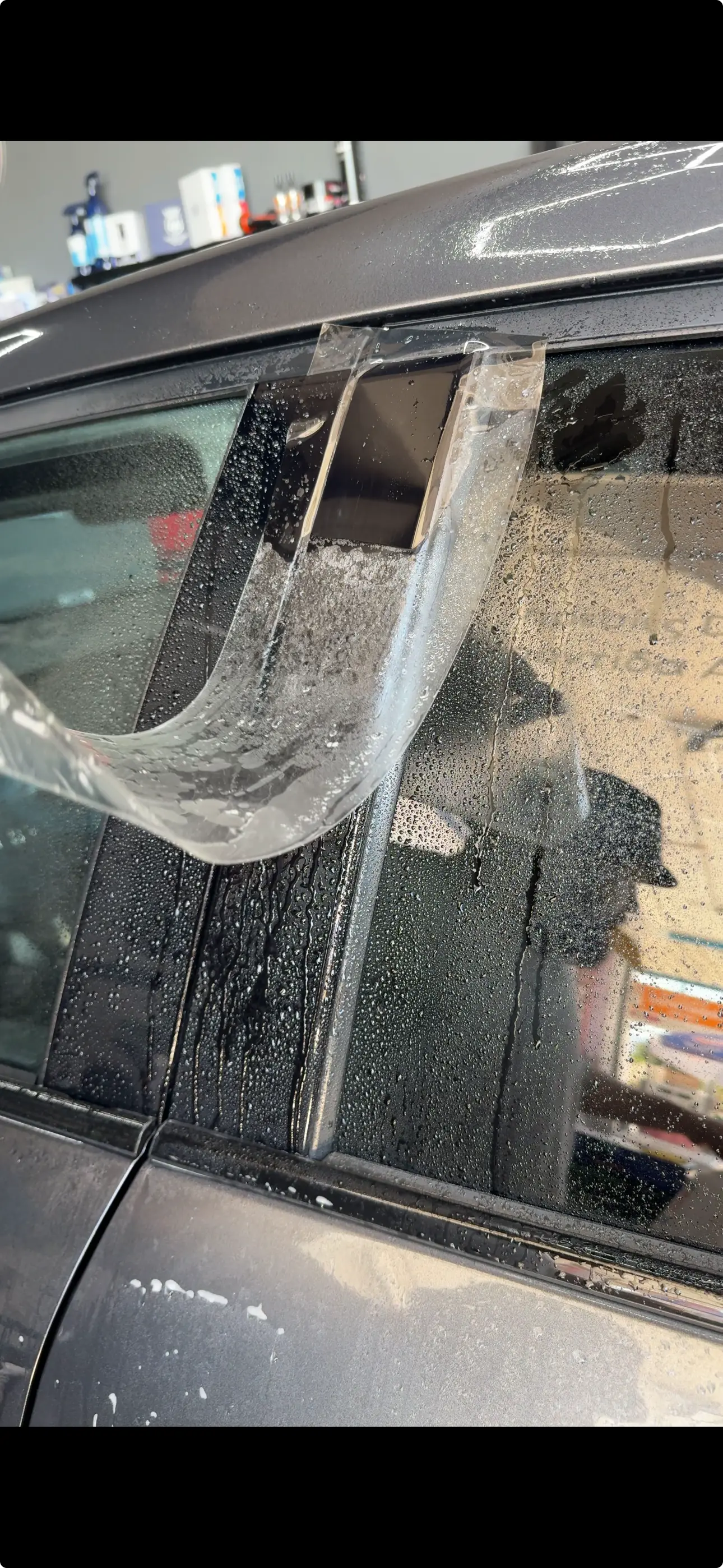
PPF is a thick, transparent, self-healing thermoplastic polyurethane film that adheres to the car's surfaces like an invisible armour.
Benefits: It's the ultimate protection. It absorbs the energy from stone chips, branches, minor abrasions and light contact in the city. It can also heal light swirl marks and scratches on its own with the help of the sun's heat.
What it doesn't do: It has a higher application cost compared to ceramic, and it needs precise professional installation so the seams don't show at the panel edges.
Ceramic or PPF? Which solution fits you
The choice depends entirely on how you drive and what you want to protect.
Choose ceramic coating if: You want your car to keep shining, wash easily, and stay protected from sun damage and natural contaminants. It's the ideal solution if you drive mostly in the city and are careful where you park. See ceramic coating →
Choose PPF film if: The car is new, you cover a lot of motorway miles, you're worried about stone chips on the bonnet, and you want peace of mind against every kind of mechanical wear. Many drivers choose to fit PPF on the most exposed areas, like the front end and wings, and ceramic coating on the rest of the car. See PPF →
At HEX Detailing Garage we look at your car's condition and your daily habits in Trikala, so we can recommend exactly what you need, without unnecessary expense.