Article Contents
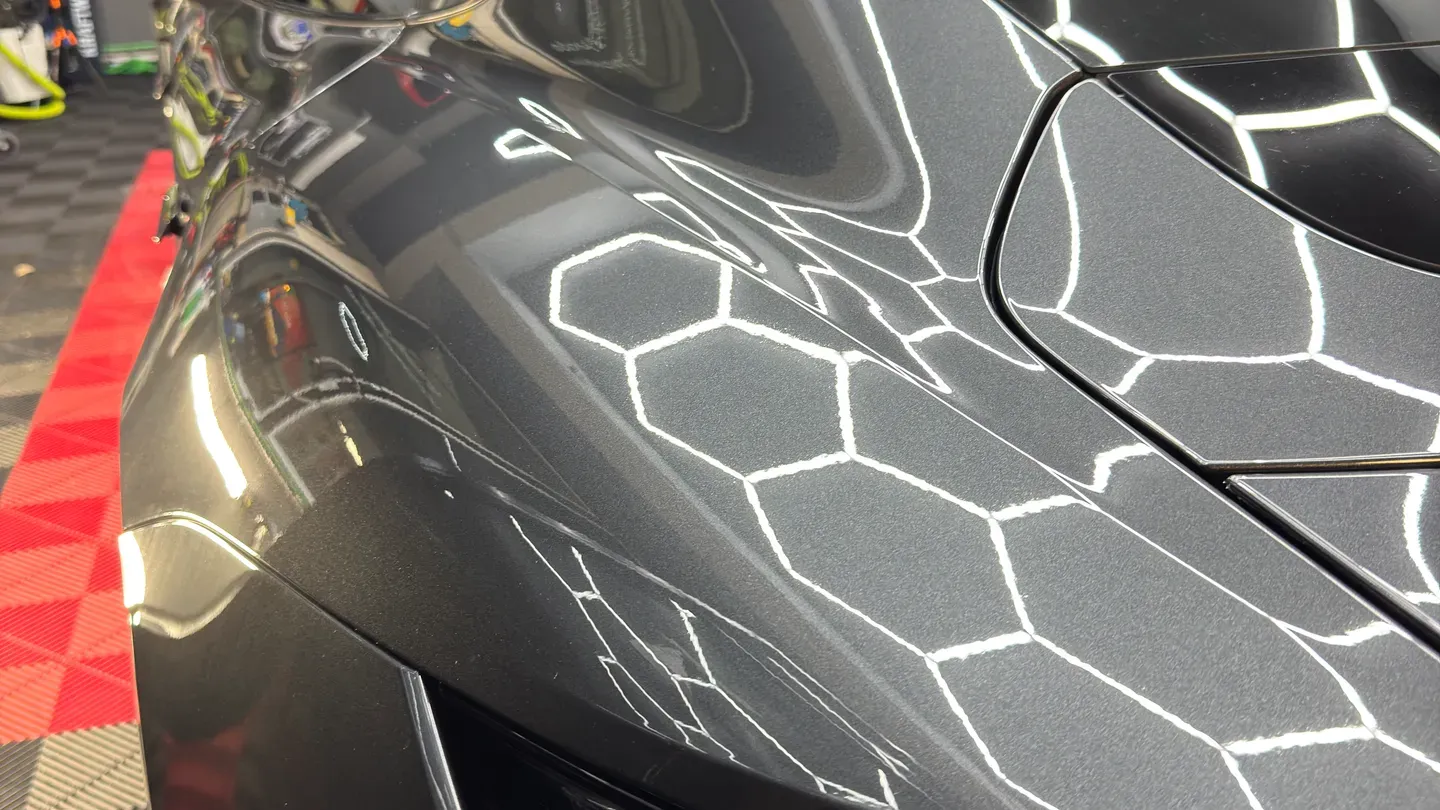
Two black cars, the same swirl marks, the same polishing package. One comes out like a mirror in three hours. The other takes a whole day and still doesn't get to the same point. The difference is almost always the clear coat.
- Every manufacturer has its own clear coat recipe. Hard clear resists more but is harder to correct. Soft clear corrects easily but also marks easily.
- The rule "German cars hard, Japanese cars soft" gives a direction, not an answer. A resprayed panel has the body shop's clear coat.
- We choose the polisher, the pad and the compound for each car.
- Before anything else we do a test spot and start with the mildest combination.
1. Hard and Soft Clear Coat
Every manufacturer uses its own clear coat recipe. Sometimes it even differs between models of the same brand.
Hard clear coat stands up better to everyday scratches. But once it's scratched, it takes more work to correct: a more aggressive compound, more passes, more patience.
Soft clear coat is the opposite. Its swirl marks come out easily, but it marks with a single wrong wipe. So here the hard part is the finish, without leaving marks of your own.
2. German, Japanese and the Exceptions
There's a well-known rule in the trade: German cars have hard clear coat and Japanese cars soft. As a starting point it holds. Many BMW, Audi and Mercedes really do need a stronger cut, while many Honda, Mazda and Nissan mark more easily.
Except there are plenty of exceptions. A panel that has been resprayed has the body shop's clear coat, not the factory's. So a German car can have a door that behaves like a Japanese one. That's why the rule gives us a direction, not the answer.
3. What We Change from Car to Car
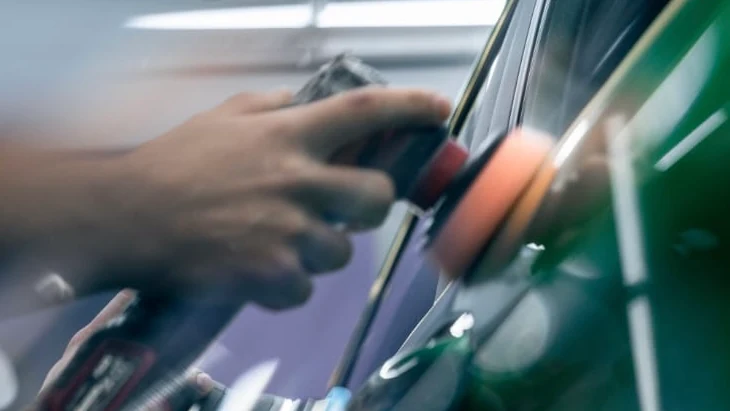
The combination of polisher, pad (foam or wool) and compound is called the polishing combination. That's what we adjust for every car.
| Hard clear coat | Soft clear coat | |
|---|---|---|
| Pad | For cutting: wool on the rotary, microfiber on the dual action | Foam, often even for cutting |
| Compound | Cutting compound, mid step, haze correction, finishing polish | Medium, or just a finishing polish |
| Polisher | Long-throw dual action or rotary | Dual action, lower speed at the end |
| The hard part | Getting the swirl marks out | Keeping the finish clean |
4. The Test Spot Comes First
We never go straight at the whole car. We pick a small area, usually somewhere that isn't immediately visible, and do a test spot. We start with the mildest combination. If it's not enough, we go up one step. Anyone can start with the strongest compound, but then they'll remove clear coat for no reason.
The test spot shows us how easily the clear coat cuts, how it finishes, and whether it needs one step or two. From there on we work with facts, not habits.
Want to see how your own clear coat behaves? Book a polish and you'll see the test spot before we start.
5. What It Means for You
- A "standard" polish that's the same for every car usually means some car will come out half-finished.
- If yours has soft clear coat, the washing afterwards is what keeps the result. A clean cloth, the right shampoo, no brushes.
- On soft clear coat a ceramic coating makes a big difference, because it takes a large share of the fine scratches before they reach the paint.
Every car has its own clear coat. That's what decides how we work.
FAQ
How do you tell if my clear coat is hard or soft?
With a test spot on a small area. The brand gives a first idea, but only the test shows how the clear coat behaves under the polisher.
Does soft clear coat mean bad paint?
No. It's a different clear coat recipe. Its swirl marks come out more easily, it just needs more careful washing so it doesn't mark again.
Do I need a ceramic coating after polishing?
It's not required. On soft clear coat, though, it makes a big difference, because it takes a large share of the fine scratches before they reach the paint.